
The
hidden cybersecurity risks of task automation: What businesses should know
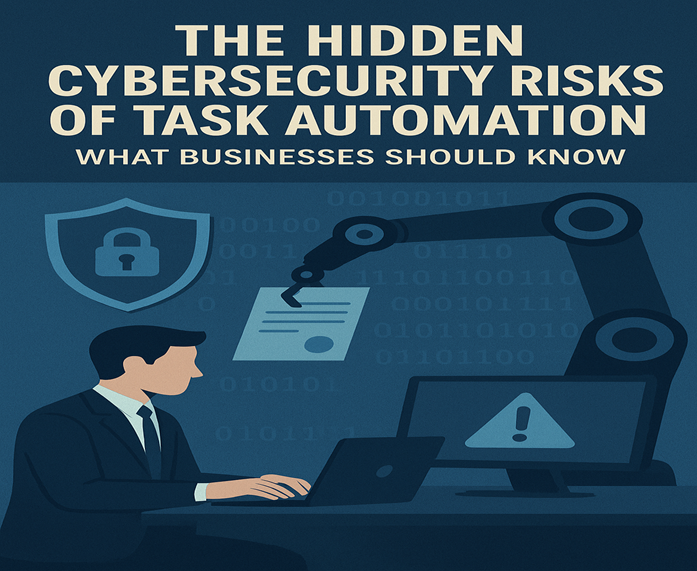
Task automation has become a significant productivity booster for businesses. Tools like Microsoft Copilot and custom scripting allow companies to eliminate repetitive work, streamline operations, and reduce human error.
While automation makes work easier, it also introduces a set of hidden cybersecurity risks that many businesses overlook. When a mistake occurs in an automated workflow, it does not happen once, it happens hundreds of times, silently. As organisations begin relying more heavily on AI and automation, understanding these risks is important.
Automation can expose sensitive data without anyone realising
Many automation workflows require broad access to data sources such as SharePoint, email inboxes, CRMs, or internal file servers. If permissions are too open, an automated task can accidentally expose financial records, customer data, HR documents, and confidential business files.
Learn more about Microsoft Power Automate here.
Misconfigured automations create repeating security gaps
Common misconfigurations include automating use creation without enforcing MFA, backups being automated but not encrypted, scripts granting overly broad access roles, and workflows that continue running long after a staff leaves.
Learn more about common misconfigurations highlighted by the Australian Cyber Security Centre (ACSC) here.
Automation often depends on sensitive credentials
To run workflows, businesses commonly use API tokens, service accounts, admin-level accounts, and stored credentials. These are frequently hardcoded in scripts in unsecured locations. If attackers obtain one automation credential, they may gain access to an entire chain of connected systems.
Learn more about Microsoft Entra – Securing service account and app credentials here.
How businesses can protect themselves while still using automation
Task automation is transforming the way businesses work, but it also introduces hidden cybersecurity risks that many organisations overlook. Automations can unintentionally expose sensitive data when workflows are given overly broad permissions, making it easy for confidential files to be shared, emailed, or synced without anyone noticing. Misconfigured workflows can also create repeating security gaps, unlike human mistakes that happen once, automation mistakes happen continuously and at scale. Finally, attackers increasingly target automated systems because they are predictable and often rely on stored credentials or service accounts that, if compromised, can provide wide access across the business.
Automation can greatly improve productivity, but without proper security controls it can silently expose data, repeat misconfigurations, and give attackers unnecessary access. MCG Computer Australia helps businesses securely implement and manage automation by auditing workflows, tightening permissions, and ensuring your systems stay protected while you work smarter. Let us help you automate safely and confidently.
Want to explore AI and cybersecurity solutions for your business?<
Let MCG Computers guide you with proactive IT support and advanced security measures.